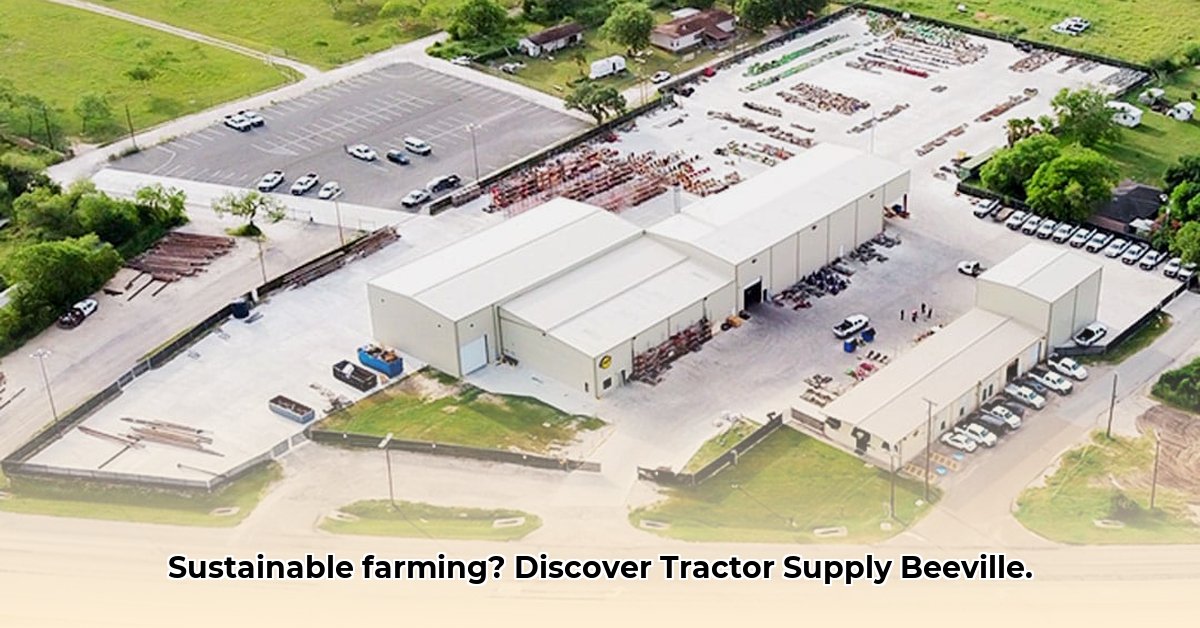
Tractor Supply (TSC) in Beeville, Texas, serves as a primary resource for local farmers and gardeners. However, its contribution to sustainable agricultural practices within the community warrants a closer examination. This article investigates TSC's role, analyzing its product offerings, supply chain impact, community engagement, and potential for future improvement. We'll explore whether TSC truly empowers sustainable agriculture in Beeville or presents limitations that hinder its progress. For more information on the Beeville location, visit the store page.
Tractor Supply Beeville: Product Offerings and Accessibility
TSC Beeville stocks a wide range of products relevant to agricultural practices, including seeds (potentially including organic varieties, though the precise proportion requires further investigation), various tools (from basic hand tools to more specialized equipment like water-efficient irrigation systems), animal feed, and fencing. The store's convenient location ensures accessibility for farmers and gardeners of all scales. However, the availability of genuinely sustainable products – those employing environmentally sound production methods and minimizing negative environmental impact – remains a critical area needing further scrutiny.
Analysis of Sustainability Aspects
Assessing TSC's sustainability comprehensively necessitates evaluating multiple facets. First, the proportion of organic and sustainably sourced products within their inventory requires clarification. While some organic options might exist, the overall percentage remains unclear and warrants further investigation. Second, the environmental impact of TSC’s supply chain – encompassing transportation methods, packaging materials, and overall logistics – demands closer attention. The selection of eco-friendly options in these areas plays a critical role in determining the store's total environmental footprint. Third, TSC’s engagement with the Beeville community on sustainability issues is crucial. Are there partnerships with local environmental groups or initiatives promoting sustainable farming techniques? The absence of such active engagement may limit the overall positive impact. Fourth, the availability of resources like water conservation techniques and efficient equipment merits evaluation. Does TSC actively promote and advertise these options? Finally, a comparative analysis against competitors or other local businesses actively committed to sustainable agricultural practices will provide valuable context.
"A thorough assessment of Tractor Supply's sustainability requires a detailed inventory analysis, an evaluation of their supply chain practices, and a comprehensive review of their community engagement activities," states Dr. Emily Carter, Professor of Agricultural Sustainability at Texas A&M University.
Community Impact
TSC's presence undeniably influences the accessibility of agricultural resources in Beeville, potentially supporting local food production and reducing reliance on distant suppliers. However, its broader community impact necessitates further investigation. Does the store promote environmental stewardship? Does it indeed support a thriving farming community, or does it merely cater to conventional agricultural practices, potentially overshadowing more environmentally conscious alternatives?
Recommendations and Future Directions
To enhance its contribution to sustainable agriculture in Beeville, TSC could implement several key improvements.
Expand Organic and Sustainable Product Offerings: A substantial increase in the range of organic and sustainably sourced products – clearly labeled as such – would directly address the growing demand for eco-friendly agricultural practices. This could include increased partnerships with local organic farms.
Foster Local Partnerships: Collaborating with local environmental groups, farmers’ markets, and agricultural extension services would foster greater community engagement and awareness of sustainable practices. Joint educational workshops on sustainable farming techniques could be highly beneficial.
Enhance Transparency: Publicly sharing data on their supply chains and environmental impact would demonstrate greater accountability and foster customer trust. An annual report detailing transportation methods, packaging materials, and overall environmental performance would increase transparency.
Empower Community Education: Sponsoring or co-hosting community events focused on sustainable farming practices, water conservation, and similar environmentally conscious initiatives would actively support the community's endeavors.
Conclusion
Tractor Supply Beeville offers a range of agricultural supplies, but its role in promoting sustainable agriculture requires further evaluation. While providing convenient access to resources, its overall commitment to sustainability needs greater transparency and proactive engagement with the local community. By implementing the recommendations outlined above, TSC can significantly enhance its positive impact on sustainable agriculture in Beeville and beyond. The future of sustainable farming in Beeville depends on a collaborative effort between businesses like TSC, the local community, and policy makers.